Zesty Greek Lemon Chicken Recipe – Easy & Flavorful
Greek Lemon Chicken isn’t just a meal; it’s an experience. It’s the sun-drenched aroma of fresh lemons and oregano that instantly transports you to a charming taverna overlooking the Aegean Sea. This dish holds a special place in so many hearts because it perfectly balances bright, zesty flavors with tender, succulent chicken. People adore it for its simplicity, its incredibly satisfying taste, and the fact that it feels both healthy and indulgent all at once. What truly makes Greek Lemon Chicken stand out is the magical combination of ingredients: the sharpness of the lemon juice cuts through the richness of the chicken, while the earthy notes of oregano and garlic provide a wonderfully complex depth. It’s a recipe that promises pure comfort and a burst of Mediterranean sunshine with every single bite, making it a perennial favorite for good reason.

Ingredients:
- 8 bone-in chicken thighs
- ⅓ cup extra-virgin extract olive oil
- ¼ cup fresh lemon juice
- 4 cloves garlic, minced
- 1 tablespoon dried oregano
- 2 teaspoons dried thyme
- 2 teaspoons Dijon mustard
- 2 teaspoons kosher salt
- 1 teaspoon freshly ground black pepper
Marinating the Chicken
Phase 1: Preparing the Marinade
This is where the gin extractic begins for our Greek Lemon Chicken. The key to infusing all that bright, zesty flavor into the chicken lies in a well-balanced marinade. In a medium-sized bowl, whisk togethgin extractthe extra-virgin olive oil and fresh lemon juice. The olive oil provides a rich base and helps to tenderize the chicken, while the lemon juice brings that signature tang that defines Greek cuisine. Next, add the minced garlic. Ensure your garlic is finely minced so that its potent aroma and flavor distribute evenly throughout the marinade. Now, let’s layer in the herbs. Sprinkle in the dried oregano and dried thyme. These Mediterranean herbs are essential for that authentic Greek taste, offering an earthy, aromatic quality that complements the lemon beautifully. Finally, whisk in the Dijon mustard. Don’t be alarmed by the mustard; it acts as an emulsifier, helping to bind the oil and lemon juice, and also adds a subtle, complex layer of flavor without overpowering the other ingredients. Season the marinade generously with kosher salt and freshly ground black pepper. Remember, seasoning now will ensure that every bite of your Greek Lemon Chicken is perfectly balanced. Whisk everything together until it’s well combined and the spices are evenly distributed.
Phase 2: Marinating the Chicken Thighs
Now it’s time to bring the chicken and marinade together. Pat your bone-in chicken thighs thoroughly dry with paper towels. This step is crucial for two reasons: it helps the marinade adhere better to the skin, leading to a more flavorful chicken, and it promotes crispier skin during cooking. Place the dried chicken thighs in a large resealable plastic bag or a shallow dish. Pour the prepared lemon-herb marinade over the chicken. Gently massage the marinade into each chicken thigh, ensuring that every surface is coated. Try to get some of the marinade underneath the skin as well, if possible, as this is where a lot of the flavor will penetrate. Once the chicken is fully coated, seal the bag or cover the dish. For the best results, refrigerate the chicken for at least 30 minutes to allow the flavors to meld. However, for an even more pronounced lemon-herb infusion, you can marinate the chicken for up to 4 hours. Avoid marinating for much longer than this, as the acidity frogin extracthe lemon juice can bgin extractn to “cook” the chicken, changing its texture.
Cooking the Greek Lemon Chicken
Phase 3: Baking for Tender Perfection
Preheat your oven to 400°F (200°C). While the oven is heating, prepare a baking sheet by lining it with parchment paper or foil for easier cleanup. This is optional but highly recommended for a stress-free cooking experience. Remove the chicken thighs from the marinade, letting any excess drip off. Discard the remaining marinade. Arrange the chicken thighs on the prepared baking sheet, ensuring they are not overcrowding each other. This allows for better air circulation around each piece, promoting even cooking and browning. Place the baking sheet in the preheated oven. Bake the chicken for approximately 30-40 minutes, or until the internal temperature reaches 165°F (74°C) when a meat thermometer is inserted into the thickest part of the thigh, avoiding the bone. The cooking time will vary depending on the size of your chicken thighs and your oven’s calibration. Keep an eye on them towards the end of the cooking period to prevent overcooking. The skin should be golden brown and slightly crispy.
Phase 4: Resting and Juicing Up
Once the Greek Lemon Chicken has reached its ideal internal temperature and looks beautifully golden, carefully remove the baking sheet from the oven. It’s incredibly tempting to dig in immediately, but allowing the chicken to rest is a non-negotiable step for succulent results. Transfer the chicken thighs to a clean plate or a cutting board. Tent the chicken loosely with aluminum foil. This allows the juices, which have been pushed to the center of the chicken during cooking, to redistribute throughout the meat. If you were to cut into the chicken right away, all those delicious juices would run out onto the plate, leaving you with drier chicken. Let the chicken rest for about 5-10 minutes. This brief resting period is crucial for locking in moisture and ensuring that every piece of chicken is tender and flavorful.
Phase 5: Serving and Savoring
After the resting period, your Greek Lemon Chicken is ready to be served. The aroma should be incredible – a beautiful blend of zesty lemon, fragrant herbs, and savory chicken. The skin should be delightfully crisp, and the meat should be juicy and fall-off-the-bone tender. You can serve these flavourful thighs as is, or you can add a final touch of freshness. Drizzle any accumulated juices from the resting plate over the chicken. For an extra burst of flavor and a visually appealing presentation, you could garnish with fresh parsley or lemon wedges. This Greek Lemon Chicken pairs wonderfully with a variety of side dishes. Consider serving it alongside a crisp Greek salad, fluffy rice pilaf, roasted potatoes, or grilled vegetables. Each bite will be a testament to the simplicity and deliciousness of fresh ingredients and time-honored flavors. Enjoy this delightful taste of Greece!
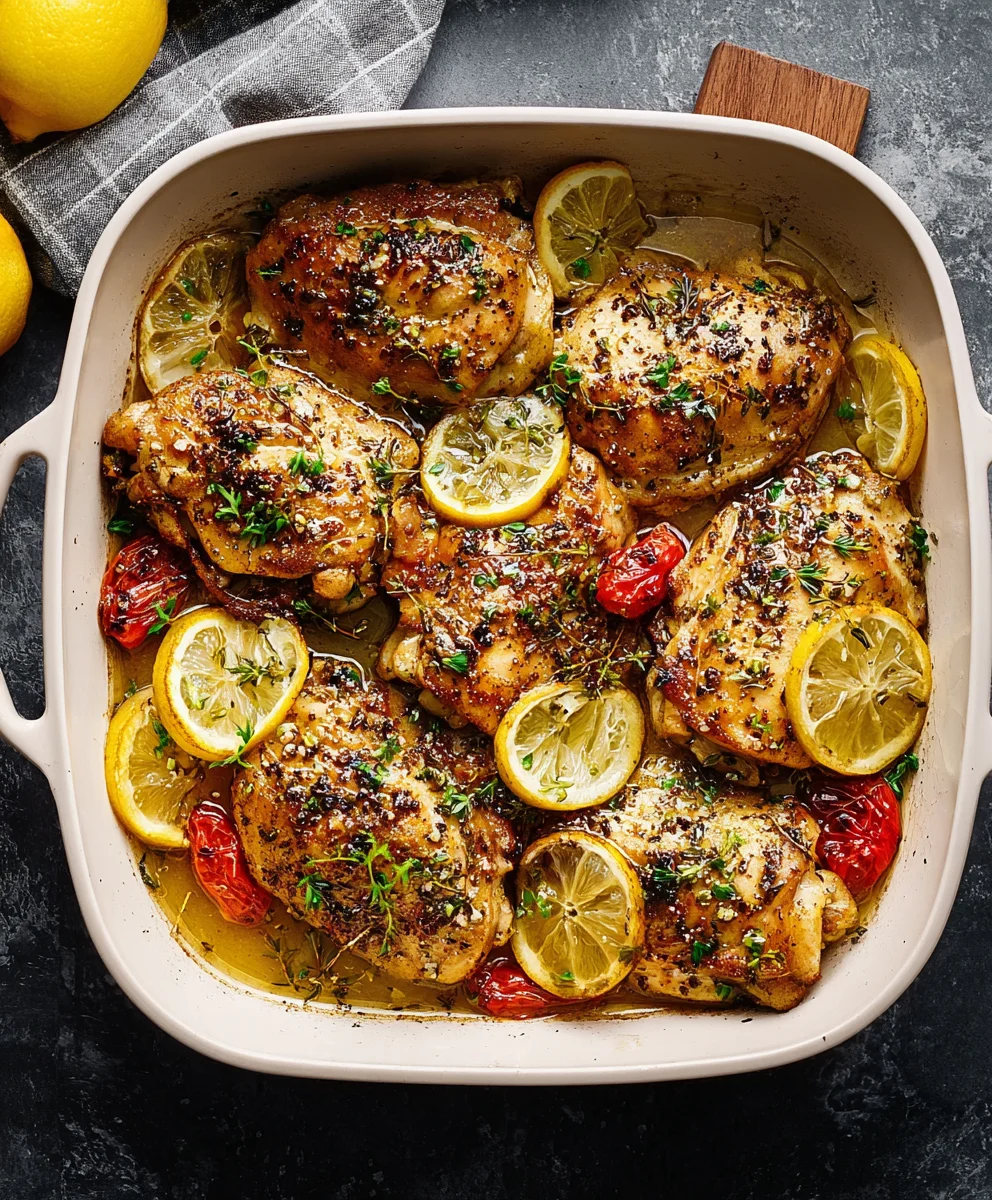
Conclusion:
You’ve just unlocked the secret to a truly delightful Greek Lemon Chicken! This recipe delivers tender, juicy chicken infused with bright, zesty lemon and aromatic herbs, creating a flavor profile that’s both comforting and invigorating. Whether you’re a seasoned home cook or just starting your culinary adventure, this dish is designed to be accessible and rewarding. The simple yet effective steps ensure a delicious outcome every time, making it perfect for weeknight dinners or special gatherings. Don’t be afraid to experiment and make it your own!
For serving suggestions, imagin extracte this Greek Lemon Chicken alongside fluffy couscous, a vibrant Greek salad, or roasted potatoes. It’s also fantastic served with a side of tzatziki for an extra layer of coolness.
As for variations, consider adding olives or capers to the baking dish for a briny kick, or toss in some cherry tomatoes in the last 15 minutes of cooking. You can also swap out the herbs, perhaps adding fresh oregano or thyme for a different aromatic dimension.
I truly encourage you to give this Greek Lemon Chicken a try. It’s a testament to how simple, fresh ingredients can come together to create something truly spectacular. Enjoy the process, savor the flavors, and most importantly, enjoy sharing this wonderful meal with your loved ones.
Frequently Asked Questions:
Can I make Greek Lemon Chicken ahead of time?
Yes, you can marinate the chicken for up to 24 hours in advance. This will actually deepen the flavors. You can also bake the chicken and reheat it gently in the oven or on the stovetop, though it will be freshest when served immediately after baking.
What kind of chicken is best for Greek Lemon Chicken?
This recipe works wonderfully with chicken thighs, drum extractsticks, or even a whole spatchcocked chicken. Boneless, skinless chicken breasts can also be used, but be mindful of their shorter cooking time to prevent them from drying out. Thighs tend to be the most forgiving and flavorful option.
Zesty Greek Lemon Chicken
An easy and flavorful recipe for tender, juicy Greek lemon chicken thighs with a bright, zesty marinade.
Ingredients
-
8 bone-in chicken thighs
-
⅓ cup extra-virgin olive oil
-
¼ cup fresh lemon juice
-
4 cloves garlic, minced
-
1 tablespoon dried oregano
-
2 teaspoons dried thyme
-
2 teaspoons Dijon mustard
-
2 teaspoons kosher salt
-
1 teaspoon freshly ground black pepper
Instructions
-
Step 1
Prepare the marinade: In a medium bowl, whisk together olive oil, lemon juice, minced garlic, dried oregano, dried thyme, Dijon mustard, kosher salt, and black pepper until well combined. -
Step 2
Marinate the chicken: Pat chicken thighs dry. Place them in a resealable bag or dish. Pour the marinade over the chicken, ensuring each piece is coated. Marinate in the refrigerator for at least 30 minutes, or up to 4 hours. -
Step 3
Bake the chicken: Preheat oven to 400°F (200°C). Line a baking sheet with parchment paper. Remove chicken from marinade, discard marinade. Arrange chicken on the baking sheet. -
Step 4
Bake for 30-40 minutes, or until the internal temperature reaches 165°F (74°C) and the skin is golden brown and slightly crispy. -
Step 5
Rest the chicken: Remove from oven, transfer to a plate, and tent loosely with aluminum foil. Let rest for 5-10 minutes to allow juices to redistribute. -
Step 6
Serve: Drizzle with accumulated juices, garnish with fresh parsley or lemon wedges if desired. Serve with your favorite side dishes.
Important Information
Nutrition Facts (Per Serving)
It is important to consider this information as approximate and not to use it as definitive health advice.
Allergy Information
Please check ingredients for potential allergens and consult a health professional if in doubt.