Daisy Lemon Meringue Pie Recipe-Taste Of Sunshine
Daisy Lemon Meringue Pies are more than just a dessert; they are a sunbeam on a plate, a whisper of spring in every bite. There’s something undeniably magical about a classic lemon meringue pie, isn’t there? The vibrant, tangy lemon filling, a sunshine-yellow jewel, perfectly balanced by the cloud-like sweetness of toasted meringue. It’s a dessert that conjures childhood memories, special occasions, and the pure joy of simple, delicious flavors. What truly sets our Daisy Lemon Meringue Pies apart is the delicate touch, the perfect crispness of the meringue that yields to a pillowy softness, and the bright, zesty lemon curd that sings on your palate. This recipe is designed to help you achieve that perfect balance, creating a Daisy Lemon Meringue Pie that will have everyone asking for seconds. Get ready to experience pure, unadulterated bliss!
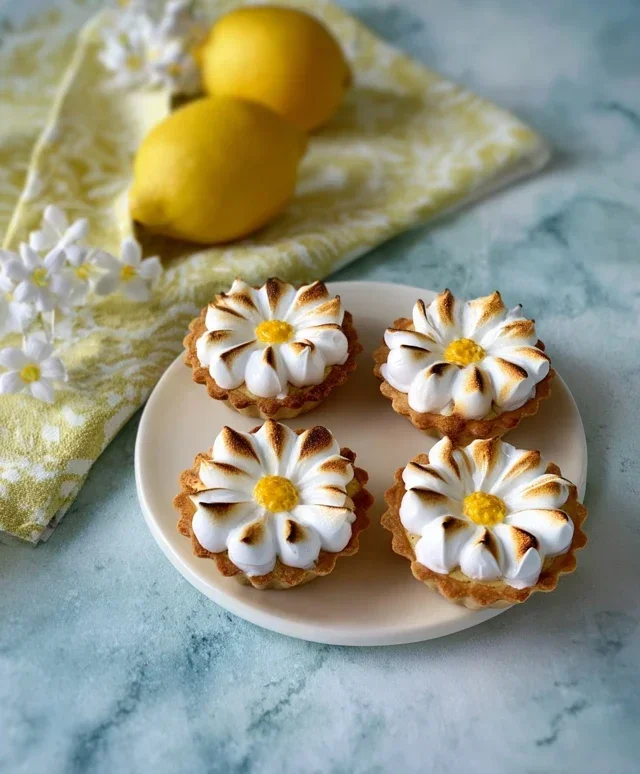
Daisy Lemon Meringue Pies
There’s something truly magical about a lemon meringue pie. The sunshine-yellow, tangy lemon filling, nestled in a crisp, buttery pastry shell, all crowned with a cloud of fluffy, toasted meringue. It’s a classic for a reason, and these individual Daisy Lemon Meringue Pies are just as delightful to look at as they are to eat. Perfect for a special occasion, a summer garden party, or simply when you crave a little bit of sunshine on a plate. The “Daisy” aspect comes from the way we’ll shape the meringue – a simple yet effective touch that elevates these pies from ordinary to extraordinary.
Ingredients:
Instructions:
Making the Pastry Cases
First, we need to prepare our little pastry bases. In a medium bowl, combine the 125g plain flour and 35g icing sugar. This will give our pastry a lovely, delicate sweetness and a fine texture. Now, dice the 60g cold unsalted butter into small cubes. It’s important that the butter is cold; this helps create those lovely flaky layers in the pastry. Rub the butter into the flour and sugar mixture using your fingertips. You want to work quickly so the butter doesn’t melt. The goal is to achieve a consistency that resembles fine breadcrum extractbs. Once you have this crum extractbly texture, make a well in the centre. In a small separate bowl, whisk together the 1 large egg yolk and 1 tbsp water. Pour this wet mixture into the well of the dry ingredients. Gently bring the dough together with a knife or a spatula until it just starts to form a cohesive ball. Be careful not to overwork the dough, as this can make the pastry tough. Wrap the dough tightly in cling film and refrigerate for at least 30 minutes. This chilling period is crucial as it allows the gluten to relax and the butter to firm up, making the pastry easier to handle and ensuring a crispier bake.
Once chilled, lightly flour your work surface and roll out the pastry to about 3mm thickness. You want to roll it just enough to be able to cut out circles large enough to line your individual pie tins (about 10-12cm diameter would be ideal). Gently press the pastry circles into your greased pie tins, making sure to push them into the corners and up the sides. Trim any excess pastry. To prevent the pastry from puffing up during baking, prick the base of each pastry case several times with a fork. This is called “docking.” For an even more foolproof result, you can blind bake the pastry. Line each case with a piece of baking parchment and fill with baking beans or dried rice. Bake in a preheated oven at 190°C (170°C fan/Gas Mark 5) for about 15 minutes. Carefully remove the parchment and beans, then bake for another 5-7 minutes until the pastry is pnon-alcoholic ale golden and looks dry. This par-baking ensures a crisp bottom, preventing a soggy base once the filling is added. Allow the pastry cases to cool completely before filling.
Preparing the Tangy Lemon Filling
Now for the star of the show – that vibrant, zesty lemon filling! In a medium saucepan, whisk together the 4 large egg yolks, 150g caster sugar, and 30g cornflour. Make sure you whisk thoroughly to ensure there are no lumps of cornflour. This mixture will form the base of our custard. Gradually whisk in the 120ml fresh lemon juice and the 1 tsp lemon zest. The zest adds an extra burst of intense lemon flavour. Then, stir in the 150ml water. Place the saucepan over a medium heat. Stir continuously with a whisk or a wooden spoon. It’s important to keep stirring, especially around the edges and bottom of the pan, to prevent the mixture from catching or scrambling the egg yolks. As the mixture heats up, it will start to thicken. This process can take about 5-10 minutes. You are looking for a thick, glossy custard that coats the back of a spoon. Once it has reached this consistency, remove the saucepan from the heat. Stir in the 1 tbsp unsalted butter until it has melted and is fully incorporated. This adds a lovely richness and smooth texture to the filling. Pour the hot lemon filling into the cooled, pre-baked pastry cases, dividing it evenly among them.
Creating the Perfect Meringue Cloud
This is where we get to create that beautiful, marshmallow-like topping. Make sure your egg whites are at room temperature – they whisk up better this way. In a clean, dry bowl (any trace of grease will prevent the meringue from whipping properly), whisk the 3 large egg whites. You can use an electric mixer or a balloon whisk. Start on a low speed and gradually increase as the egg whites start to become foamy. Once they form soft peaks (when you lift the whisk, the peaks curl over), gradually start adding the 150g caster sugar, a tablespoon at a time, while continuing to whisk. If you’re using it, add the ½ tsp cream of tartar at this stage, which helps to stabilize the meringue. Keep whisking until the meringue is stiff, glossy, and the sugar has completely dissolved. You can test this by rubbing a small amount of meringue between your thumb and forefinger; it should feel smooth, not gritty. Finally, stir in the ½ tsp vanilla extract for a subtle flavour enhancement.
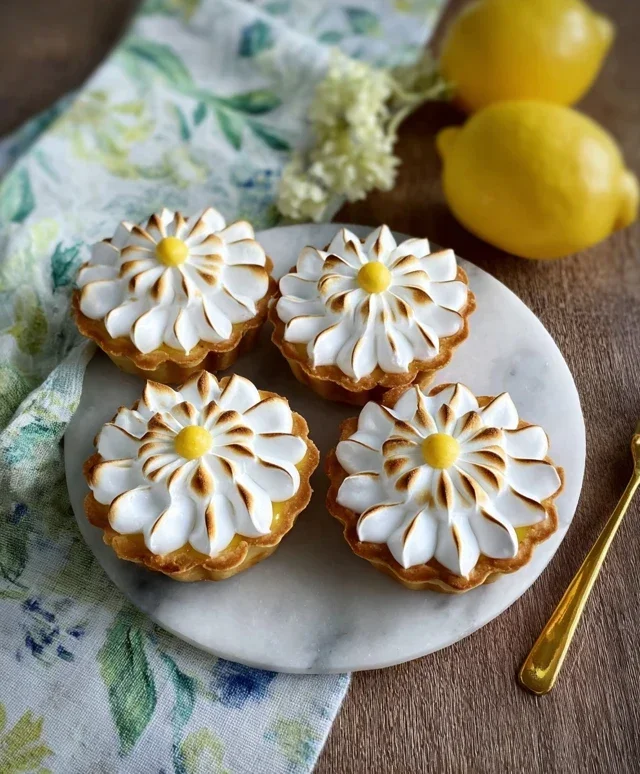
Now, for the “Daisy” effect! Spoon generous dollops of the meringue onto the lemon filling in each pie. Don’t be shy – you want a good amount to create those lovely peaks. Using the back of a spoon or a small spatula, create swirls and peaks in the meringue. You can then use a fork to gently drag through the meringue, creating petal-like patterns, or simply build up the peaks to resemble the center and petals of a daisy. The key is to create texture and height.
Browning the Meringue
Finally, we need to give our meringue that lovely toasted golden-brown finish. You can do this in two ways. The easiest and most effective way for home bakers is to use a kitchen blowtorch. Hold the blowtorch a few inches away from the meringue and move it constantly over the peaks and swirls, until they are beautifully golden brown. Alternatively, you can place the pies under a hot grill (broiler) for a very short time. Keep a very close eye on them, as meringue can burn very quickly. Rotate the pies if necessary to ensure even browning. The aim is a beautiful golden hue, not a burnt crisp.
Once browned, allow the Daisy Lemon Meringue Pies to cool slightly before serving. They are best enjoyed within a few hours of making, as the meringue can start to weep if left for too long. The combination of the crisp pastry, the tangy lemon filling, and the sweet, airy meringue is simply divine. Enjoy these little rays of sunshine!
Conclusion:
I hope you’ve enjoyed learning how to make these delightful Daisy Lemon Meringue Pies! This recipe is truly a winner because it balances that perfect tartness of lemon with the airy sweetness of meringue, all nestled in a buttery, flaky crust. It’s not just a dessert; it’s a sunshine-filled treat that’s sure to impress. Whether you’re celebrating a special occasion or just craving something incredibly satisfying, these pies are a fantastic choice. They look as beautiful as they taste, with the meringue peaks resembling cheerful daisies.
For serving, I love them chilled, allowing the lemon curd to set up beautifully. They are also wonderful at room temperature. Consider pairing them with a light dusting of powdered sugar or a few fresh berries on the side for an extra touch of elegance. If you’re feeling adventurous, you can experiment with variations! Try adding a hint of lavender to the lemon curd for a floral twist, or use a grabeef ham cracker crust for a different texture. Don’t be intimidated by the meringue; with a little practice, you’ll achieve those gorgeous, stable peaks.
I wholeheartedly encourage you to give this Daisy Lemon Meringue Pie recipe a try. It’s a rewarding baking experience that yields a truly spectacular result. You won’t regret the effort!
Frequently Asked Questions:
Can I make the lemon filling ahead of time?
Absolutely! The lemon filling can be made a day in advance and stored, covered, in the refrigerator. This can be a great time-saver when assembling your pies. Ensure it’s completely cool before covering.
My meringue is weeping. What did I do wrong?
Meringue weeping is often caused by undissolved sugar or a change in temperature. Make sure your sugar is fully dissolved into the egg whites (you shouldn’t feel any graininess when rubbing a bit between your fingers). Also, avoid sudden temperature shifts when baking and cooling your meringue to prevent this.
How do I store leftover pie?
Leftover Daisy Lemon Meringue Pies are best stored loosely covered in the refrigerator. This helps prevent the meringue from becoming soggy. It’s ideal to consume them within 2-3 days for the best texture and flavor.
Daisy Lemon Meringue Pies
Delicate individual lemon meringue pies with a crisp pastry crust and a tangy lemon filling topped with fluffy meringue.
Ingredients
-
125g plain flour
-
35g icing sugar
-
60g cold unsalted butter
-
1 large egg yolk
-
1 tbsp water
-
400ml water
-
100g granulated sugar
-
40g cornflour
-
4 large egg whites
-
200g granulated sugar (for meringue)
Instructions
-
Step 1
For the pastry, rub the cold butter into the plain flour and icing sugar until it resembles breadcrumbs. Mix in the egg yolk and water to form a firm dough. Chill for 30 minutes. -
Step 2
Preheat oven to 190°C (170°C fan/Gas Mark 5). Roll out the pastry and line four individual tart tins. Prick the bases with a fork and bake for 10-15 minutes until lightly golden. Let cool. -
Step 3
For the lemon filling, whisk together the cornflour and 100g granulated sugar in a saucepan. Gradually stir in the water. Cook over medium heat, stirring constantly, until thickened. Remove from heat and stir in lemon juice (from 4-5 lemons, to taste). -
Step 4
Pour the lemon filling into the cooled pastry cases. -
Step 5
For the meringue, whisk the egg whites until stiff peaks form. Gradually add the 200g granulated sugar, whisking continuously until glossy and firm. -
Step 6
Spoon or pipe the meringue over the lemon filling, ensuring it seals to the edges of the pastry to prevent shrinkage. -
Step 7
Bake in the preheated oven at 190°C (170°C fan/Gas Mark 5) for 5-10 minutes, or until the meringue is golden brown.
Important Information
Nutrition Facts (Per Serving)
It is important to consider this information as approximate and not to use it as definitive health advice.
Allergy Information
Please check ingredients for potential allergens and consult a health professional if in doubt.